
If you run a small business, hire a freelancer, sell services, or work with clients, you will often hear two terms: service agreement and contract. They sound similar, and people often use them in the same sentence. That is where confusion starts.
The topic of service agreement vs contract in the UK matters because the wrong document can lead to unclear duties, payment delays, weak protection, and disputes. Beginners usually think a contract must be long, formal, and full of legal language. In reality, an agreement can become legally binding if it has the right elements.
This guide explains the key difference in simple language, with examples and practical steps. By the end, you will know when a service agreement is enough, when a wider contract is better, and what clauses every UK business should review before signing.
Quick beginner use: apply service agreement vs contract UK when choosing client paperwork, service agreement vs contract UK before signing supplier terms, and service agreement vs contract UK when checking risk.
A service agreement is a written document that explains how one party will provide a service to another party. It usually focuses on the work being done, the price, the deadline, the responsibilities, and what happens if either side fails to do what they promised.
In simple terms, it is a practical agreement for service-based work. For example, a web designer may use a service agreement with a café owner to build a website. A marketing consultant may use one to set monthly duties, reporting dates, and payment terms.
For beginners searching for a service agreement vs contract UK, the easiest way to understand it is this: a service agreement is a type of contract, but it is focused mainly on services.
You can understand service agreements in more detail if your business regularly works with clients, suppliers, consultants, or contractors.
A clear service agreement usually includes:
A Professional Service agreement may also include professional standards, insurance, reporting rules, and limits of responsibility. This is common for accountants, consultants, agencies, IT providers, and business advisers.
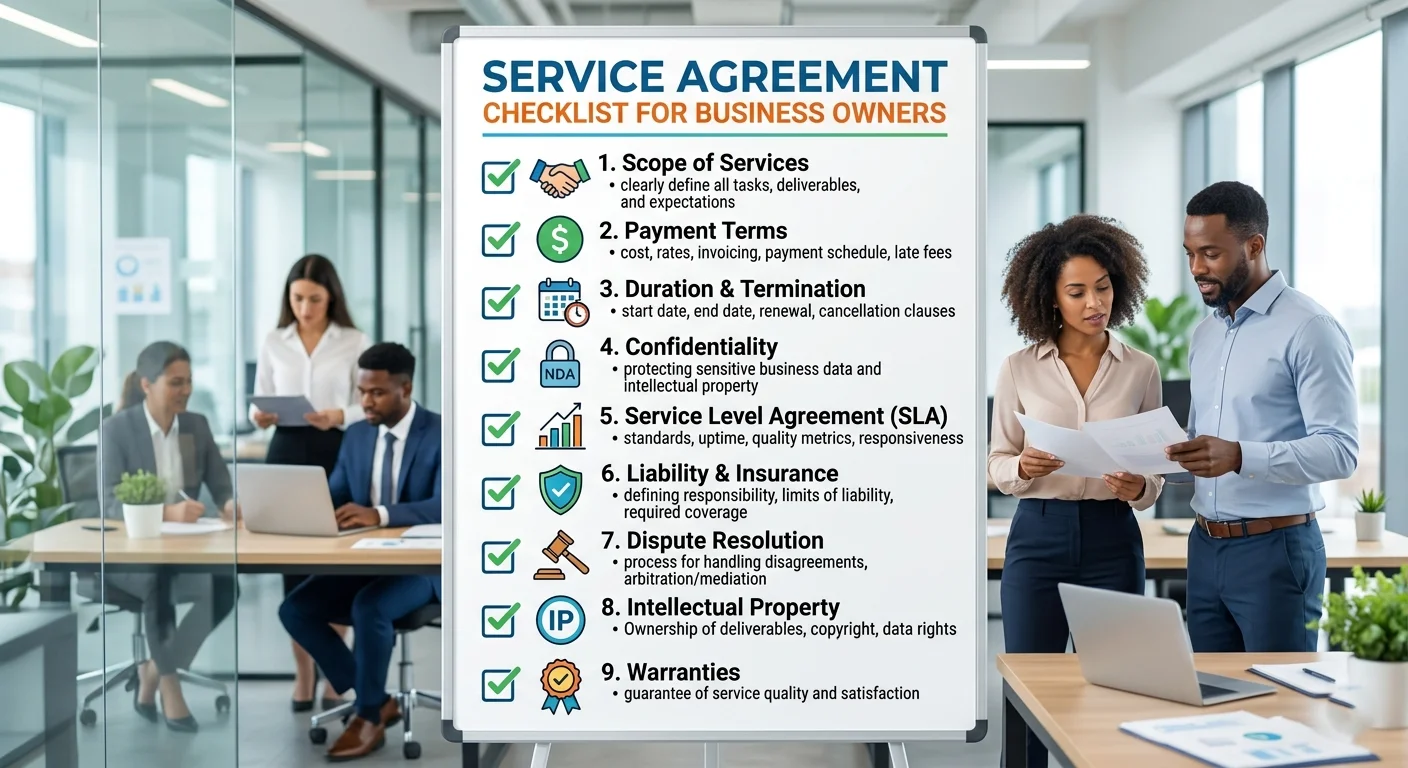
A legally binding commitment between both parties is called a contract.
It can cover services, goods, employment, leases, partnerships, licences, loans, or many other business arrangements.
A contract does not always need to be called a “contract.” It could be called an agreement, terms of business, order form, letter of engagement, proposal, or statement of work. What matters most is whether the parties clearly agreed to legal obligations.
This is why a service agreement vs contract UK can feel confusing. The title of the document is less important than the legal effect of the document.
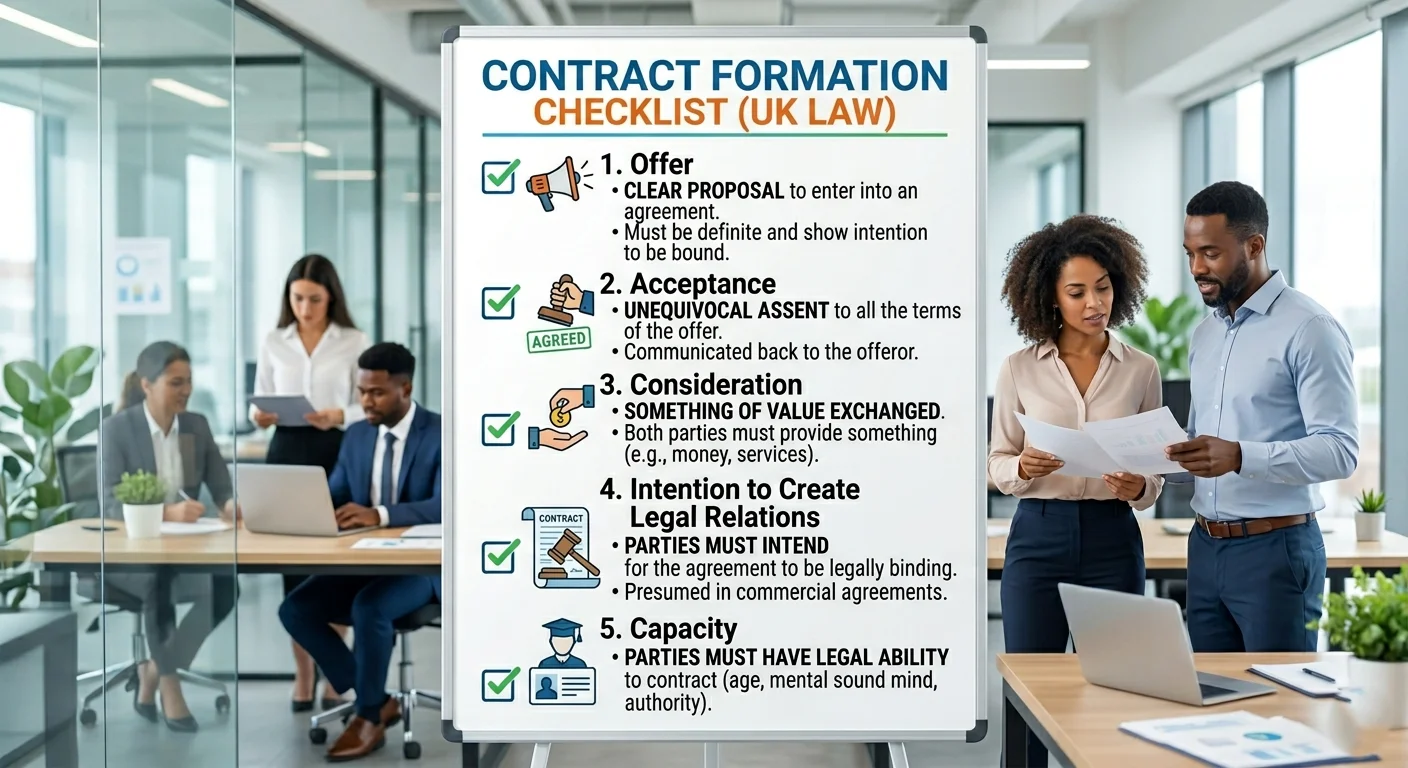
You can learn more about contracts if you want to understand how offer, acceptance, consideration, and intention to create legal relations work in business.
A strong contract usually includes:
In many UK business situations, an email chain, signed proposal, purchase order, or online acceptance can help create a contract. That is why beginners should avoid casual wording when discussing prices, deadlines, and commitments.
The key difference is scope. A service agreement is mainly about providing services. A contract is a wider legal term that can apply to many types of business deals.
Think of it like this:
For service agreement vs contract UK, the practical question is not “Which word sounds more legal?” The better question is “What risk do I need this document to control?”
If you are hiring someone to clean an office, manage social media, repair equipment, or provide consulting, a service agreement is usually the right starting point. If the deal includes share ownership, property rights, employment duties, finance, licensing, or complex risk, a broader contract may be needed.
Use a service agreement when the main purpose is service delivery. It is especially useful when the work involves time, skill, advice, labour, maintenance, or ongoing support.
Common examples include:
A Professional Service agreement is useful when the provider gives expert advice or specialist work. It should explain what the professional will do, what they will not do, and what the client must provide.
In service agreement vs contract UK searches, many beginners want a simple answer. Use a service agreement when you need clarity around work, payment, deadlines, revisions, and client approvals.
Use a contract when the deal is broader than a service task or when the risk is higher. A contract may be better for long-term partnerships, investment, asset sales, employment relationships, licensing, distribution, or property arrangements.
For example, if your business lets another company use your software, logo, training material, or product designs, you need terms that cover intellectual property, usage rights, restrictions, and termination. A basic service agreement may not be enough.
A contract may also be needed when:
This is where the service agreement vs contract UK becomes a strategic business decision, not just a wording issue.
Imagine a UK bakery hires a small marketing agency to manage Instagram, Facebook, and monthly email campaigns.
A simple service agreement could cover:
This agreement gives both sides clear expectations. The bakery knows what it will receive. The agency knows when it will be paid. If the bakery asks for extra reels, adverts, or weekend posting, the agreement can say that those are charged separately.
Now imagine the same agency is also building a custom e-commerce platform, storing customer data, licensing software, and managing paid ads, all on a £20,000 monthly budget. That needs a more detailed contract with data protection, intellectual property, liability, account ownership, approval rules, and termination terms.
That is the real-world value of understanding service agreements vs contract in the UK.
Before you sign any agreement or contract, review the main clauses carefully. Do not focus only on price.
Make sure the document clearly says what is included and what is excluded. Vague wording creates disputes. “Marketing support” is weak. “Four blog posts, eight social posts, one monthly report, and two strategy calls” is much clearer.
Check the deposit, invoice dates, VAT position, payment deadline, and late payment process. If cash flow matters, avoid unclear phrases like “payment after completion” without saying what completion means.
Many disputes happen when the client asks for “one small change” again and again. Your agreement should explain how revisions, additions, and urgent work are charged.
Look for limits on liability, exclusions, warranties, and responsibilities. A fair contract should protect both sides without hiding unreasonable risks in small print.
A good document explains how the relationship can end. It should cover notice periods, unpaid fees, handover duties, and what happens to unfinished work.
You can explore legal terms if you want plain-English explanations of common contract phrases before signing.
Use this simple process before choosing between a service agreement and a contract:
This step-by-step approach makes service agreement vs contract UK easier for beginners because it connects the document to the actual business risk.
Many new business owners make avoidable mistakes when using an agreement or contract.
Avoid these:
A Professional Service agreement should never feel like a formality. It protects time, trust, money, and working relationships.
The difference between a service agreement and a contract is simple once you understand the purpose. A service agreement focuses on services. A contract is the wider legal category that can cover many business promises.
For UK beginners, the safest approach is to match the document to the deal. If the work is mainly service delivery, use a clear service agreement. If the deal is complex, long-term, high-value, or involves extra legal risk, use a fuller contract.
The main lesson from the service agreement vs contract UK is this: do not wait for a dispute before taking the paperwork seriously. Clear terms help both sides know what to do, when to do it, how to pay, and how to end the relationship if needed.
A well-written agreement is not just legal protection. It is a business tool that builds confidence, reduces confusion, and helps professional relationships run smoothly from day one.
For more beginner-friendly guidance, visit our business compliance guide and review your key documents before your next client or supplier deal.