
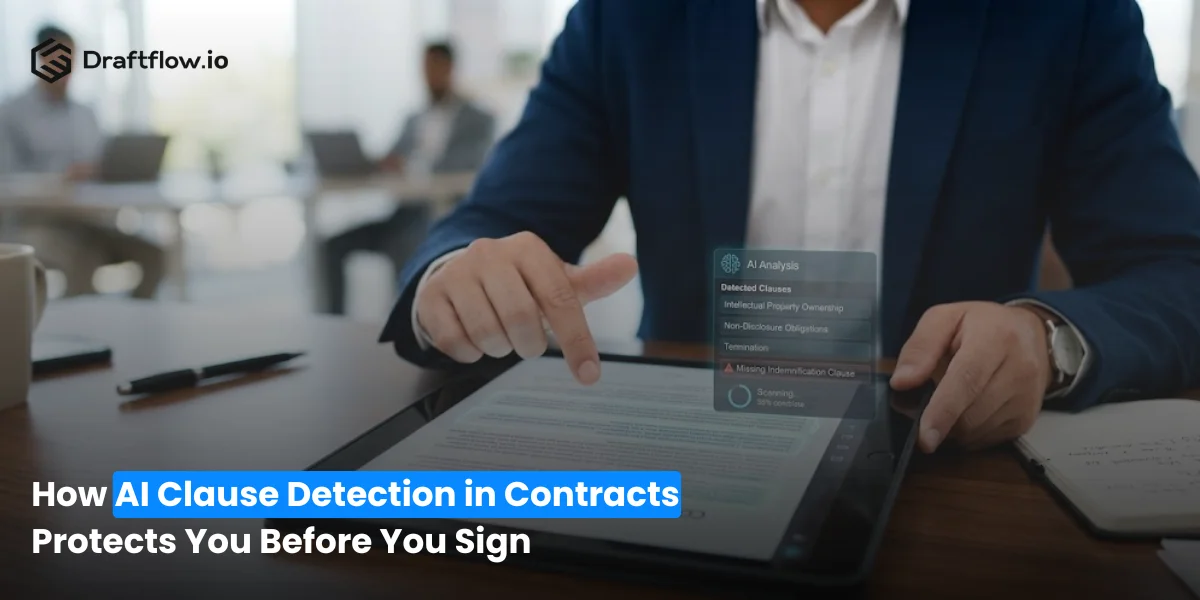
Signing a contract should feel like a confident decision, not a gamble. Yet many people in the UK sign agreements without fully understanding the legal clauses buried inside them. Hidden fees, restrictive terms, automatic renewals, and liability clauses often go unnoticed until problems arise. That is exactly where AI clause detection contract technology becomes valuable.
Modern AI tools can scan contracts in minutes, highlight risky language, and explain legal terms in plain English. For individuals, freelancers, startups, and businesses, this creates a faster and safer way to review agreements. Platforms like Draftflow are helping users move beyond manual contract reading and toward smarter decision-making.
Before you sign anything, understanding how AI clause detection works can protect your time, money, and legal position.
An AI clause detection contract tool uses artificial intelligence to identify, analyse, and explain clauses within legal agreements.
Instead of manually reading pages of legal language, AI reviews the document and detects sections that may require attention.
These tools typically analyse:
The technology relies on Natural Language Processing (NLP), which allows computers to understand written language and recognise legal patterns.
Think of it as an intelligent first reviewer.
Rather than replacing lawyers, AI supports users by making contract language easier to understand and helping identify clauses that deserve closer review.
Most AI contract analysis systems follow a simple process:
This process dramatically reduces the time spent reviewing contracts.
Traditional manual review can take hours. AI completes an initial analysis within minutes.
For UK users handling employment contracts, tenancy agreements, supplier contracts, or business partnerships, this speed matters.
Many contract problems happen because people assume standard documents are harmless.
They are not.
A contract is designed to protect the parties who drafted it. That means terms may favour one side more heavily than the other.
Using AI clause detection contract technology helps uncover issues early.
Legal documents often contain complex wording that masks important obligations.
For example:
A software subscription agreement may include an automatic renewal clause with a long notice period.
Without noticing it, a company could remain locked into expensive services for another year.
AI highlights these sections immediately.
That visibility helps prevent costly surprises.
Speed matters in business.
Delays in reviewing contracts can slow hiring, procurement, partnerships, and sales.
According to legal industry studies, contract review remains one of the most time-consuming legal tasks, often consuming significant administrative resources.
AI reduces this burden.
Instead of searching manually for problematic clauses, users can focus directly on highlighted risks.
Legal terminology creates barriers.
Terms such as:
may confuse non-lawyers.
A good AI system explains these clauses in straightforward language.
This improves understanding and supports informed decisions.
People negotiate better when they understand what they are signing.
If AI flags:
You can request revisions before signing.
Knowledge creates leverage.
Even experienced professionals overlook details when reviewing lengthy documents.
Fatigue and time pressure increase risk.
AI provides consistency.
It scans every section with the same level of attention.
That consistency strengthens review quality.
Using AI for contract analysis is straightforward, but results improve when users follow a structured approach.
Not all tools are built equally.
When evaluating an AI contract platform, look for:
Security matters.
Contracts often contain sensitive business or personal information.
Always review how documents are stored and protected.
Once uploaded, AI begins reviewing the document.
Typical supported files include:
The scan generally takes seconds or minutes, depending on complexity.
The system identifies:
This provides an immediate overview.
Do not treat every clause equally.
Focus first on areas with the greatest legal or financial impact.
Common priorities include:
AI can prioritise these sections for faster decision-making.
AI highlights what appears unusual.
That does not automatically mean a clause is unacceptable.
It simply means it differs from typical standards or contains elevated risk.
Use the findings as discussion points.
Review whether terms align with your needs and expectations.
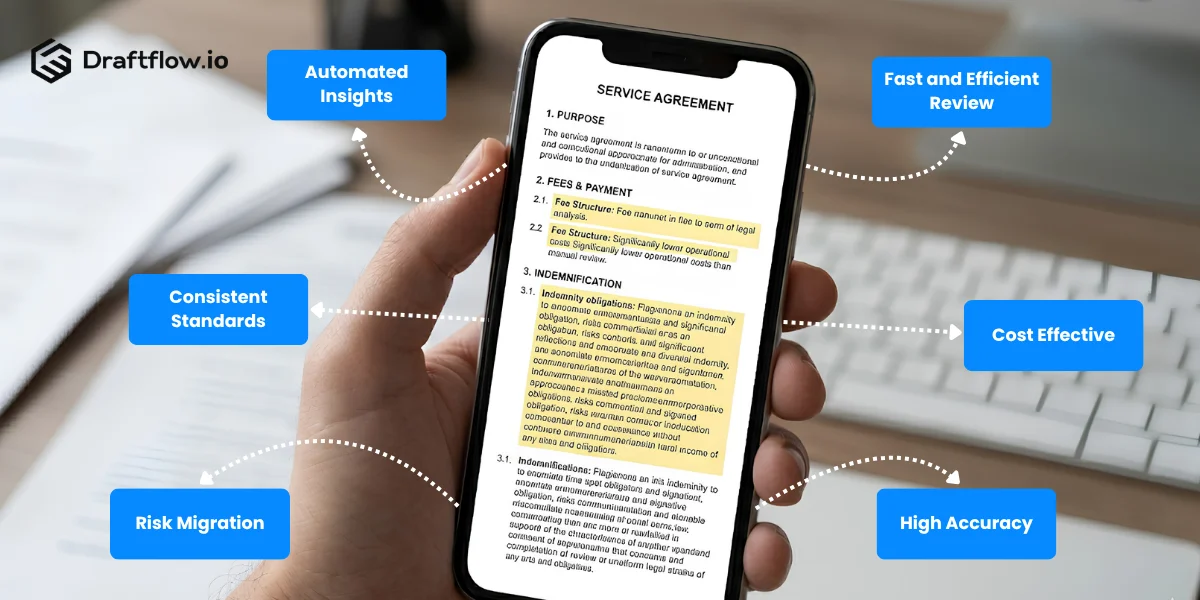
AI improves review efficiency but does not replace legal judgment.
Complex agreements still require professional review.
Examples include:
AI serves as a powerful first layer, not the final decision-maker.
AI helps, but users still make avoidable mistakes.
Understanding these pitfalls improves outcomes.
Fast analysis is useful.
Blind trust is dangerous.
Some users upload contracts, see a low-risk score, and sign immediately.
That approach misses context.
Risk depends on your goals and situation.
Always read highlighted sections.
Problems often hide in seemingly minor details.
Examples include:
Small wording changes create significant obligations.
AI helps surface these details, but users must still evaluate them.
A common misconception is:
“It is just a standard contract.”
Standard for whom?
Template agreements are frequently written to protect the issuing organisation.
Never assume fairness without review.
Free or outdated systems may provide shallow analysis.
Accuracy matters.
Look for platforms with reliable clause recognition and clear explanations.
A weak system creates false confidence.
Contracts contain confidential information.
Before uploading documents, verify:
Trust should extend beyond the analysis itself.
As AI legal technology evolves, platforms like Draftflow are helping users approach contracts more strategically.
Draftflow facilitates quicker comprehension and better decision-making rather than requiring individuals to decipher complex legal jargon on their own.
A strong contract review platform should deliver:
This matters particularly in the UK market, where employment agreements, service contracts, and commercial documents often contain technical legal wording.
Consider a realistic example.
A UK freelancer receives a client contract for a long-term project.
The agreement appears straightforward.
However, an AI review identifies two concerns:
Without detection, the freelancer could lose rights and flexibility.
After reviewing the flagged sections, the freelancer negotiates revised wording before signing.
This scenario demonstrates the practical value of AI clause detection contract tools.
They do not create conflict.
They create clarity.
Users who rely on AI regularly can strengthen results with a few advanced habits.
Use consistent review criteria.
Ask:
AI findings become more useful when paired with structured thinking.
Contracts evolve during negotiation.
Review every revised version.
Small wording edits can introduce major obligations.
AI makes repeated reviews easier and faster.
AI recognises language patterns.
Humans understand business priorities.
The strongest contract decisions combine both.
This balanced approach reduces risk while preserving practical judgment.
Contracts shape financial, professional, and legal outcomes. Signing without understanding them creates unnecessary risk.
AI has changed the review process by making legal language easier to understand and important clauses easier to identify. From highlighting hidden obligations to improving negotiation confidence, these tools provide meaningful protection before commitments are made.
An AI clause detection contract solution is not about replacing lawyers or removing human judgment. It is about making smarter decisions faster and with greater clarity.
If you want greater confidence before signing your next agreement, explore modern AI-powered contract review and take control of the fine print with confidence.
Yes. Modern AI systems identify many common risk areas, including liability, renewal, and termination clauses. An AI clause detection contract tool provides a strong first review layer, although complex agreements may still require legal advice.
Yes. Using AI to analyse contracts is legal in the UK. These tools support document review and understanding but do not replace regulated legal services.
No. AI improves speed and clarity but does not replace legal professionals. High-value or legally complex agreements still benefit from solicitor review.
Draftflow supports contract understanding by helping users identify important clauses and review agreements more efficiently. It assists with risk visibility and faster document analysis while keeping the user involved in decision-making.
An AI clause detection contract system works well for employment agreements, supplier contracts, NDAs, tenancy agreements, service agreements, and freelance contracts. These documents often contain recurring clauses that AI can identify and explain effectively.